

How, and where do you store the things you value most?
Gold and gems rest in treasure boxes. Precious heirlooms are carefully wrapped and tucked away in safes. Even fragile letters or photographs find their place in albums and vaults. But where do you store your memories?
Not just birthdays or anniversaries, but the subtle nuances of a moment — the sound of a loved one’s laughter, the smell of your grandmother’s kitchen, the traditions that shaped your family, the stories of heroes and sheroes who ignited inspiration in you. Where do you keep the recollections of ordinary days that, when woven together, become the very fabric of a life well-lived?
The truth is, many of us keep them only in our minds. But minds, however brilliant, have a limited shelf-life. Memories fade. Details blur. Entire narratives vanish when left unrecorded. What once felt unforgettable becomes irretrievable. And in that quiet disappearance, an entire generation’s wealth of wisdom, identity, and legacy can be lost.
Books: The vaults that time cannot break
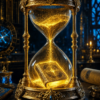
Treasures are stored where they will not perish. Gold does not rust in vaults. Diamonds do not crumble in velvet boxes. In the same way, memories must be stored in vessels that can withstand the erosion of time. That vessel is a book. Indeed, books preserve the treasure of our words. Books are not mere bundles of pages bound by covers. They are powerful repositories — vaults of human experience and emotion. Between their lines lie the capacity to guard history, preserve culture, and immortalise lives. Books allow generations yet unborn to meet ancestors they never saw, to walk in times they never lived, and to touch wisdom they might otherwise never access. A well-documented life in a book becomes more than a story — it is a bridge across time. It allows you to travel back into moments that would otherwise be lost: to hear voices long silenced, to see events unfold with startling clarity, and to relive experiences as if you were right there, shoulder-to-shoulder with those who came before you.
Think of it this way: if you hold water in your palms, no matter how tightly you squeeze, it will eventually slip away. But pour that same water into a vessel, and it can be carried, shared, and even drawn from in future. Memory is like that. Left uncontained, it evaporates. Documented in a book, it endures. This powerfully depicts the fragility of memory in comparison to the power of documentation.
Books ensure that your family’s traditions, your community’s triumphs, and your personal journey are not left to chance. They become maps for those who come after you — guiding, teaching, and inspiring them to dream, to persevere, and to remember where they came from.
Every family has stories worth telling. Every life holds wisdom worth preserving. You don’t need to be a global leader or a celebrated figure to have a story that matters. In fact, the everyday chronicles of ordinary people often become the most treasured legacies — because they reveal the heartbeat of culture, resilience, and faith in a way no history book ever could. That is why your story matters. The question then becomes not whether your story should be documented, but when and how. The sooner you begin, the more you can capture with vivid accuracy — before time quietly erases what your heart assumed it would always remember.
In view of this, where are you storing your treasures? Where is the vault of your memories, your family’s culture, your life’s legacy? If you truly value them, let them not remain vulnerable to the frailty of human recall. Let them live where the winds of time and fading memory cannot destroy: in a book. Because books do not just store words. They store lives. And long after we are gone, they continue to speak.




Recent Comments